Rapa Nui music and dance are more than forms of entertainment: they are living expressions of an ancestral heritage. These manifestations play a central role in the cultural identity of the Rapa Nui people, transmitting stories, values and emotions through rhythms, movements and melodies.
Origins and evolution: Music and dance as a cultural language
Since ancient times, music and dance have been essential to narrate the oral history of Rapa Nui, celebrate sacred events and pay homage to ancestors and deities.
Key features:
- Oral transmission: songs and choreographies were passed from generation to generation as part of the collective memory.
- Polynesian connection: influences shared with other Pacific islands, adapted to the local environment and worldview.
- Spirituality and symbolism: many dances were rituals associated with fertility, war or natural cycles.
These practices have evolved over time, incorporating contemporary elements without losing their original essence.
Traditional Rapa Nui music styles
Rapanui music is characterized by its rhythmic richness, its natural instrumentation and the use of the Rapanui language in the songs.
Traditional instruments most commonly used:
- Polynesian Ukulele: melodic base of many local compositions.
- Shark skin drums(pahu): they mark the rhythm in celebrations and ceremonial dances.
- Seashells: used as wind or percussion instruments.
One of the most distinctive vocal styles is the hīmene, a polyphonic chant charged with harmony and emotion, frequent in festivities and religious events.
Rapa Nui Dances: Movement with meaning
Traditional dances are a fusion of body expression, rhythm and symbolism, each with a specific narrative purpose.
Most representative dances:
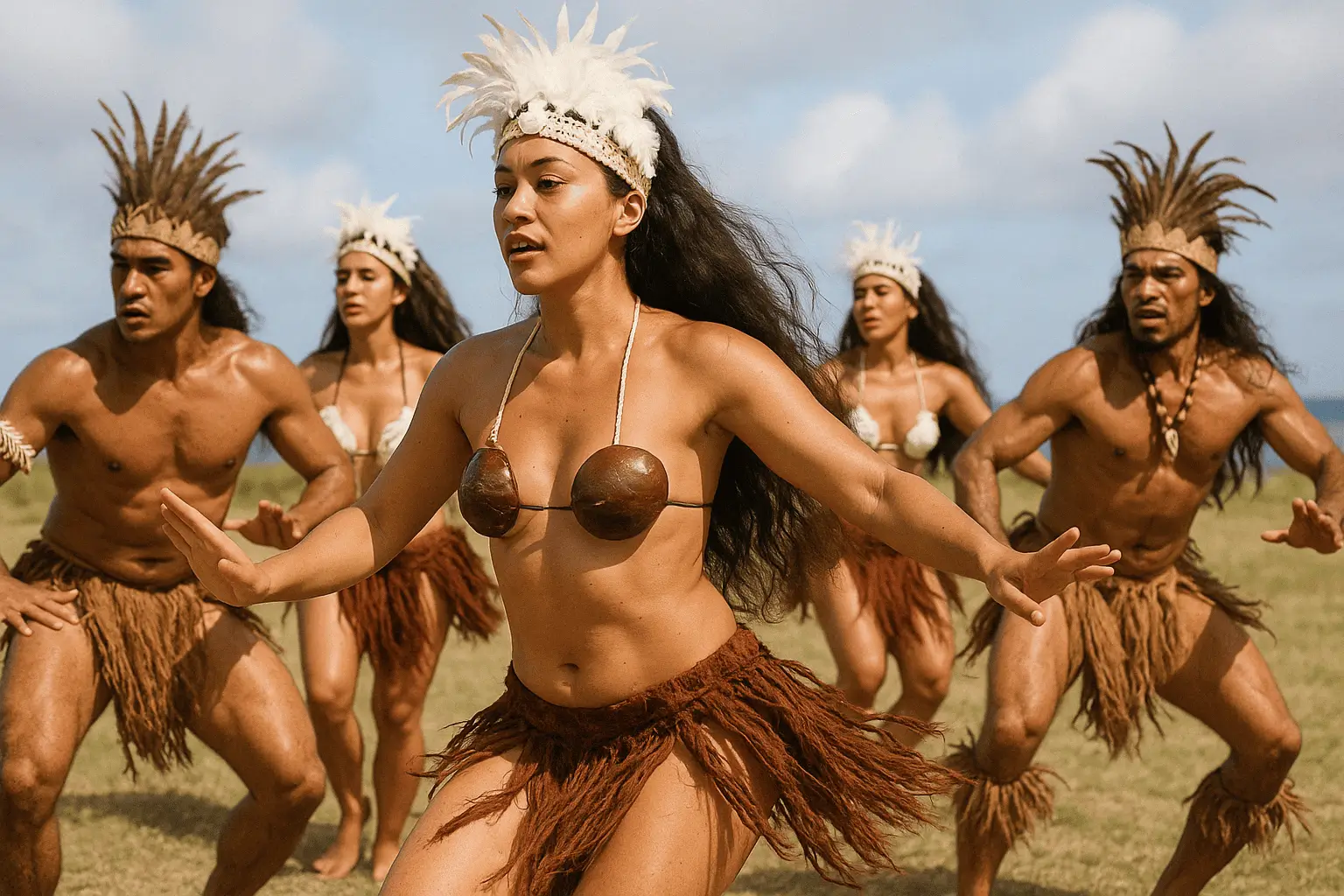
- Sau sau: cheerful and energetic dance, adapted from Samoa, with soft and sensual movements. Very popular in public performances.
- Haka: warrior dance that expresses strength, union and determination.
- Kai kai: female dance accompanied by chanting, related to the weaving of threads and the connection with the ancestors.
Each dance is accompanied by live music and traditional costumes: natural fiber skirts, floral crowns and body paintings.
Learn music and dance in Rapa Nui
Participating in a workshop or class is an authentic way to connect with the local culture.
Options for visitors:
- Cultural schools in Hanga Roa: they offer group or private lessons in singing, percussion and ukulele.
- Traditional dance workshops: ideal for learning basic choreographies and their cultural significance.
- Interactive shows: with open classes prior to the presentation.
These experiences promote respect and appreciation of an ancient culture.
Rapa Nui music and dance are fundamental pillars of island life. They reflect a form of cultural resistance and celebration that is still alive. If you wish to learn more about Easter Island traditions and festivities, we invite you to explore our other articles.
Discover our guided tours and more on our social networks.