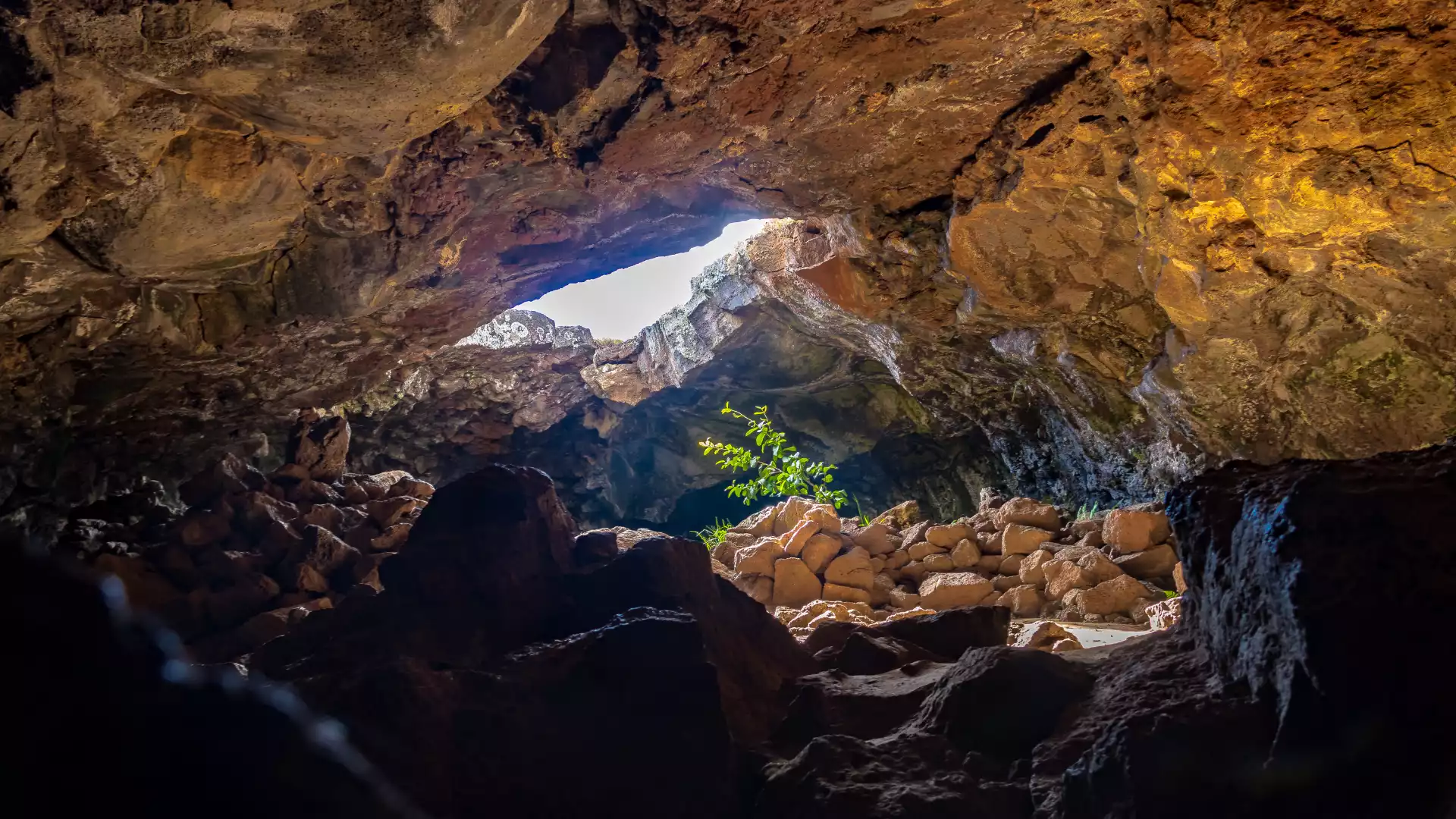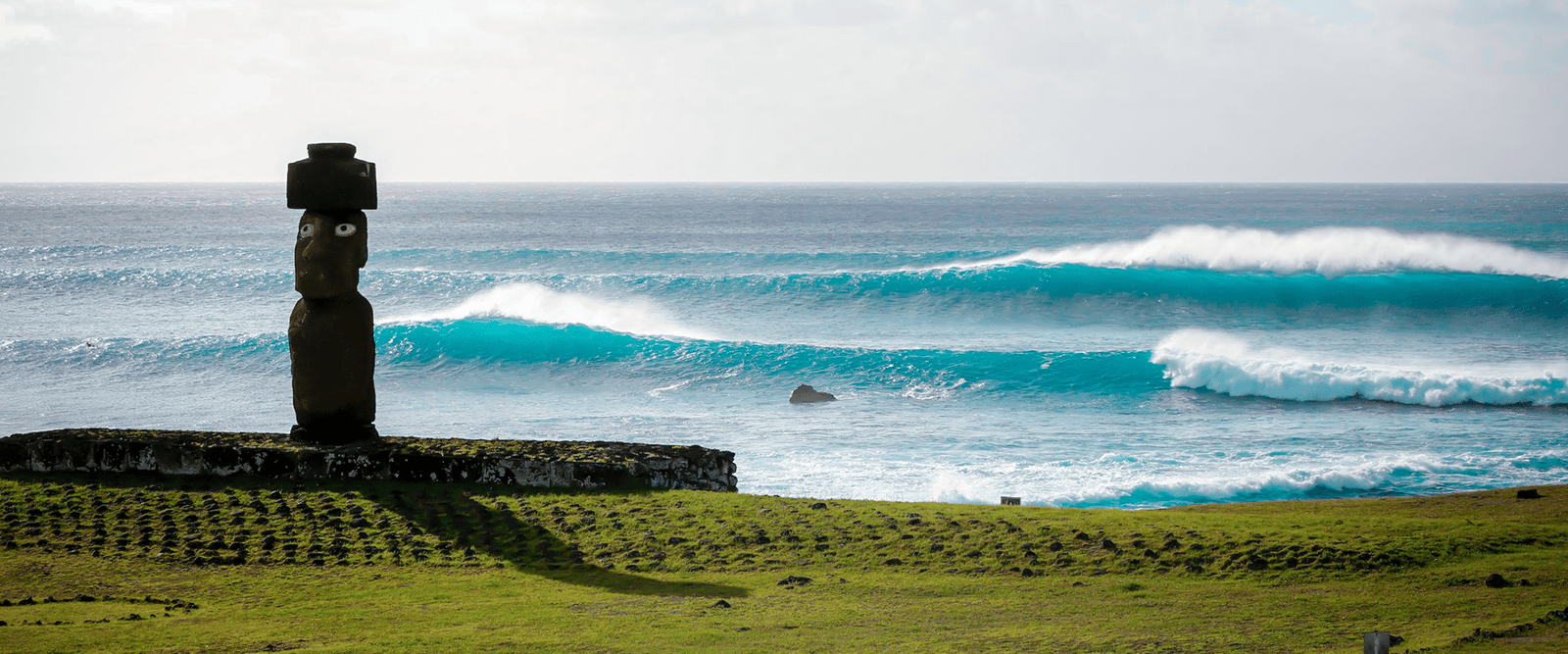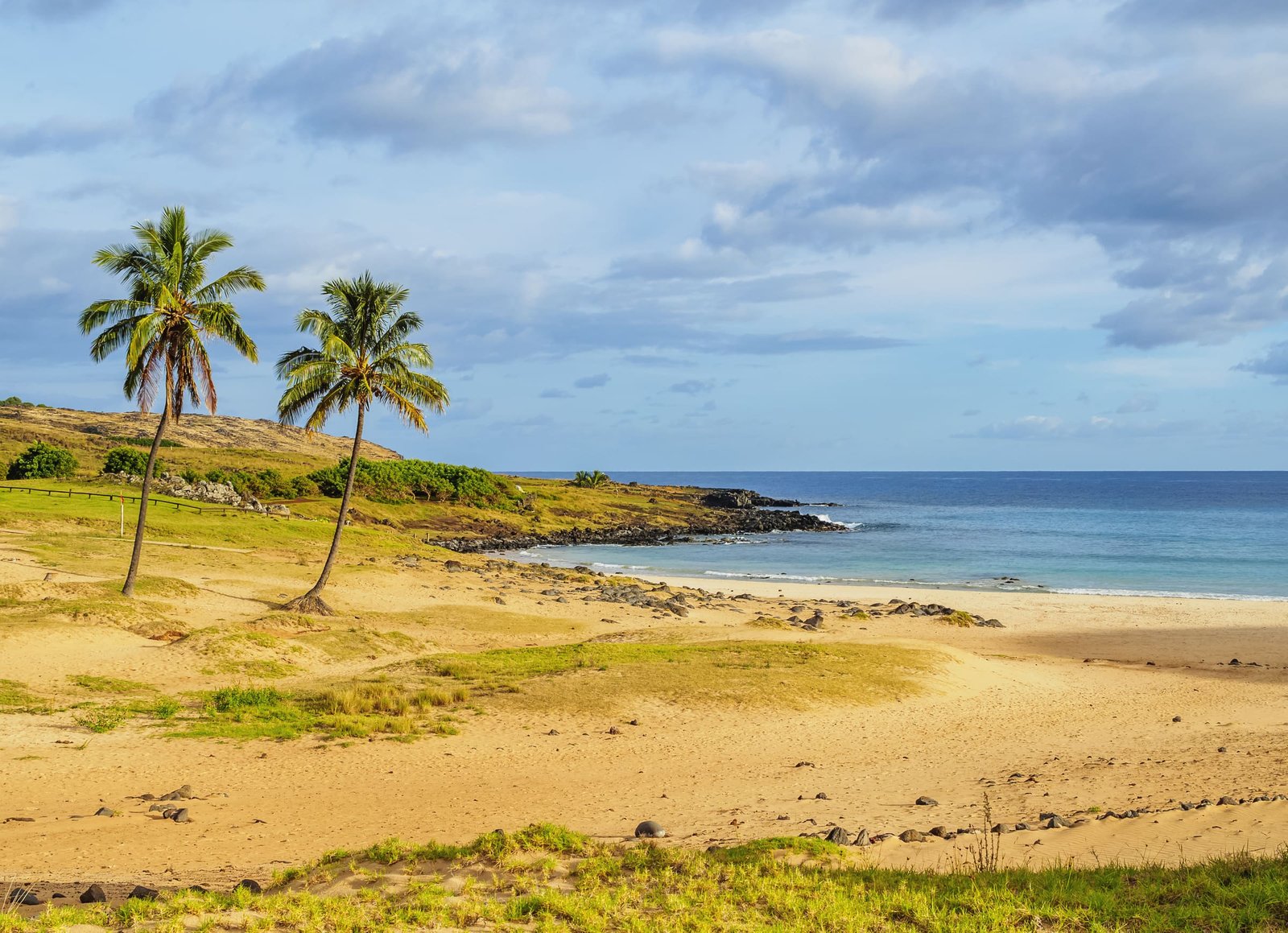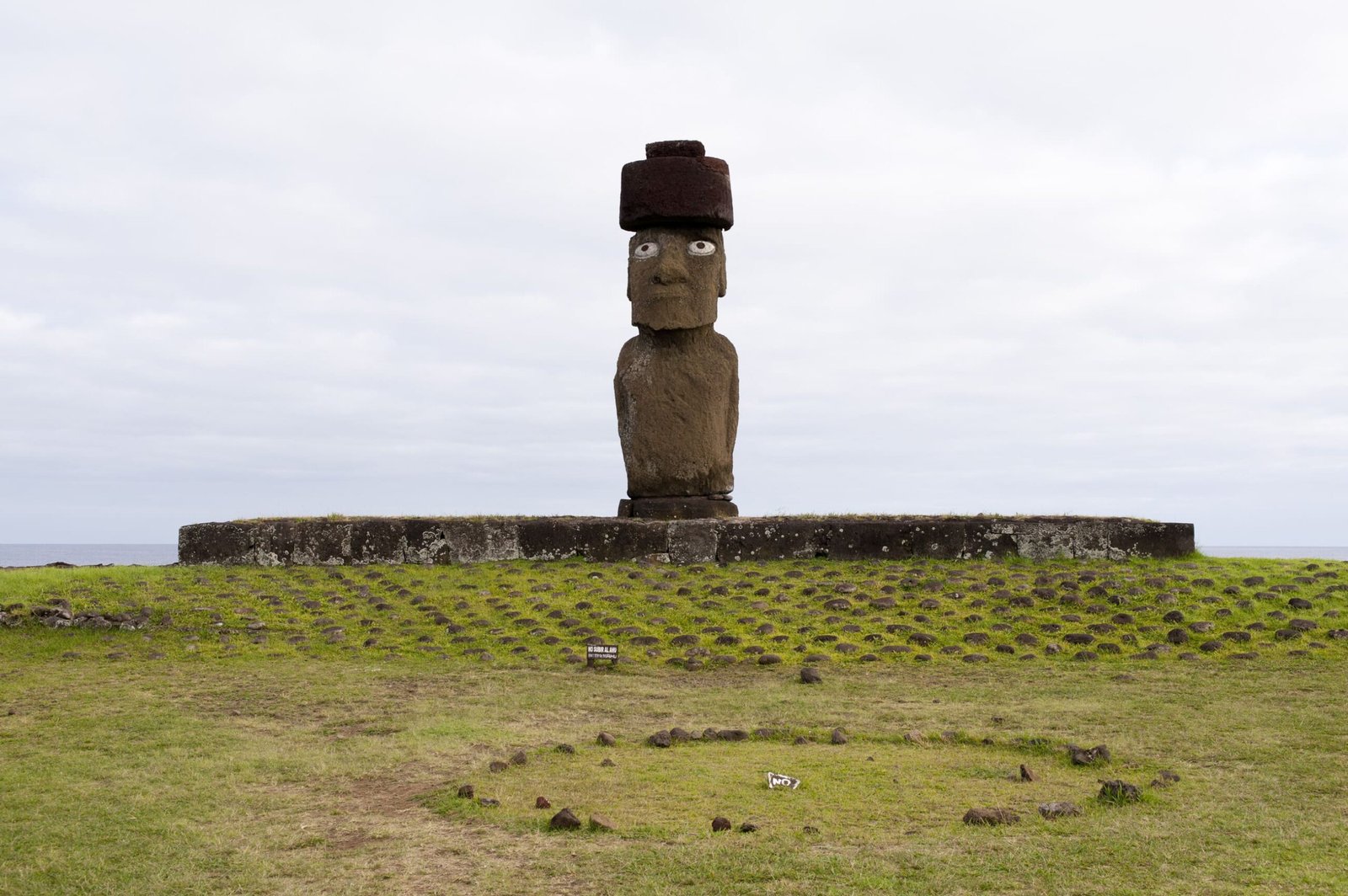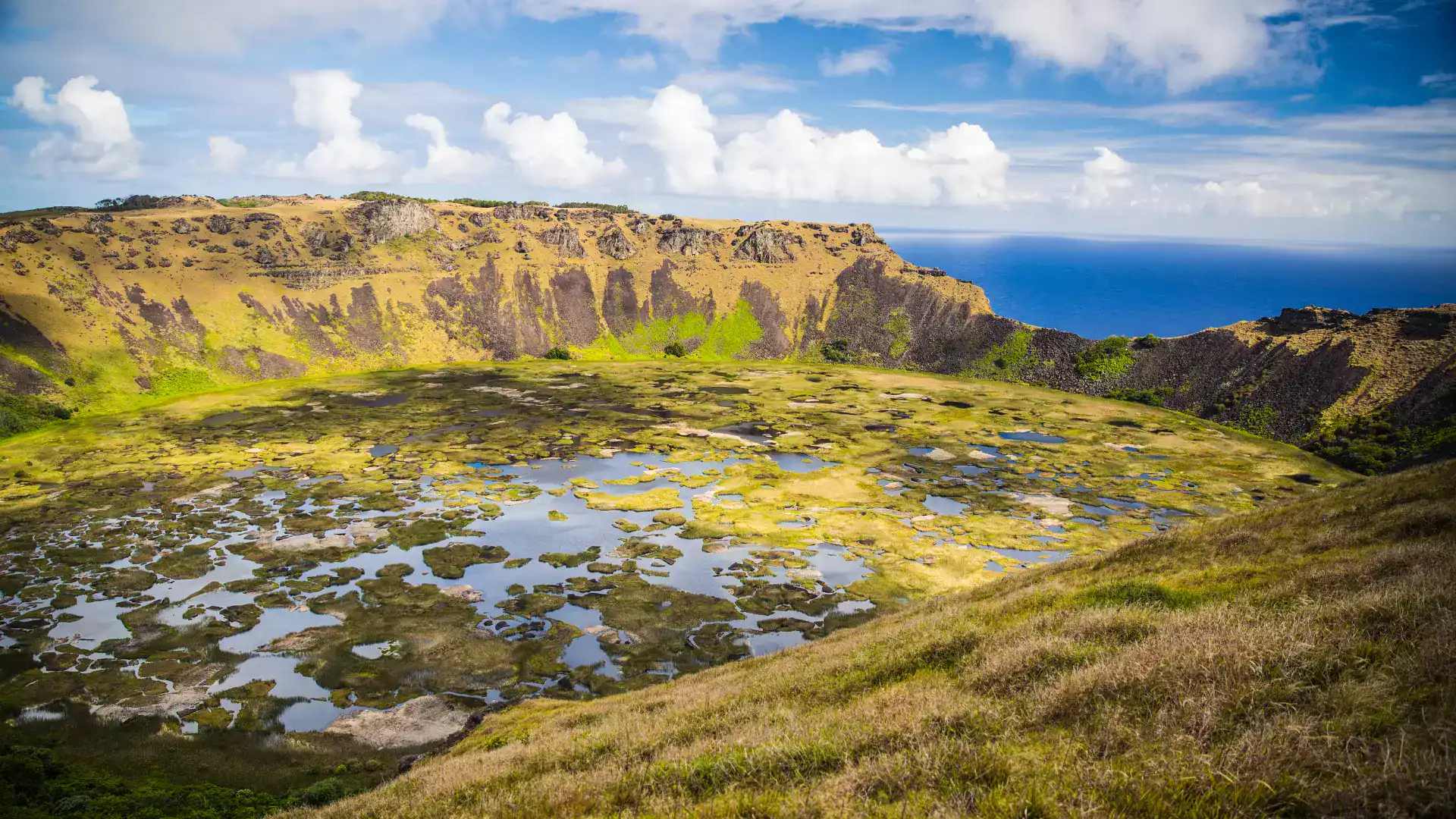
The landscape of Rapa Nui is not casual. Each hill, crater and rock formation has a common origin: volcanic activity. The island was born from fire and the movement of the earth, and that origin is still present in its geography, its soil and its cultural identity.
To understand how Rapa Nui was formed is also to understand why its landscape is so unique.
An island created by volcanic eruptions
Rapa Nui was formed from successive submarine eruptions that, over time, emerged above sea level.
This process gave rise to:
- A triangular-shaped island
- Soils of volcanic origin
- Absence of permanent rivers
- Craters visible in different parts of the territory
Volcanic activity was the starting point for everything that exists on the island today.
The main volcanoes of Rapa Nui
Although the island is not large, it has several volcanoes that play different roles in its geography.
Rano Kau
Located near Hanga Roa, it stands out for its large crater with an interior lagoon.
Main characteristics:
- One of the most impressive craters of the island
- Abundant vegetation in its interior
- Important scenic and cultural value
Rano Raraku
More than a volcano, this place is known for having been the quarry where most of the moai were carved.
Its importance lies in:
- Type of volcanic rock
- Its central role in ancestral sculpture
- The concentration of statues at different stages of carving
Poike
It is one of the oldest volcanoes on the island and presents a landscape different from the rest.
It is characterized by:
- Most eroded surfaces
- Less vegetation
- More arid appearance
This contrast demonstrates the geological diversity of Rapa Nui.
The volcanic soil and life on the island
The volcanic origin directly influenced the way of inhabiting the territory.
The volcanic soil allowed:
- Adapted agricultural techniques
- Moisture conservation between rocks
- Use of stone as the main material
Although challenging, this soil was used with ingenuity by the ancient inhabitants.
Volcanoes, landscape and spirituality
Volcanoes not only shaped the land, they also influenced the worldview of the Rapa Nui people.
They were associated with:
- Sacred spaces
- Origin stories
- Places of observation and ritual
The volcanic landscape was an active part of the cultural and spiritual life.
A landscape that feels different
To walk on Rapa Nui is to walk on living geological history. The gentle hills, craters and volcanic rocks create a unique atmosphere, very different from other Pacific destinations.
Each tour reveals how the natural force shaped an unrepeatable island.
Exploring the origin of the island at leisure
Observing the volcanoes of Rapa Nui invites you to travel the island without haste, paying attention to its shapes, colors and silences.
If you are interested in learning more about the natural environment that surrounds Hotel Hare Nua, you can explore our image gallery and discover how the volcanic landscape is part of the hotel’s day to day life.
You can also contact us at if you are planning your visit or follow us on Instagram to see the island from a closer and everyday look.