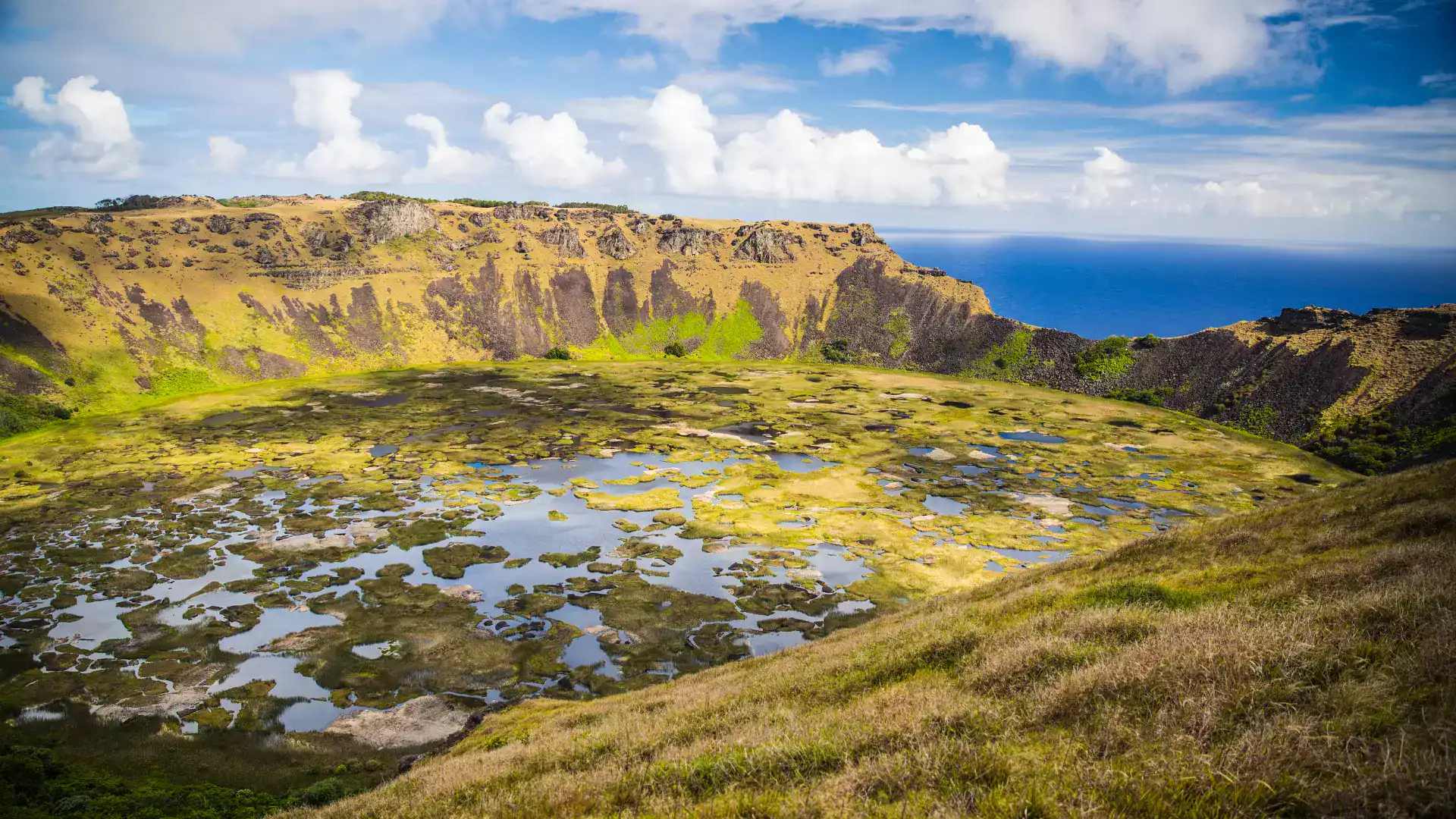
Ana Te Pahu, also known as the Cave of Bananas, is one of the most fascinating subway formations on Easter Island. Located in the foothills of Maunga Terevaka, this cavern is a testimony to the rich volcanic history and agricultural ingenuity of the ancient inhabitants of Rapa Nui.
A large drum of petrified lava
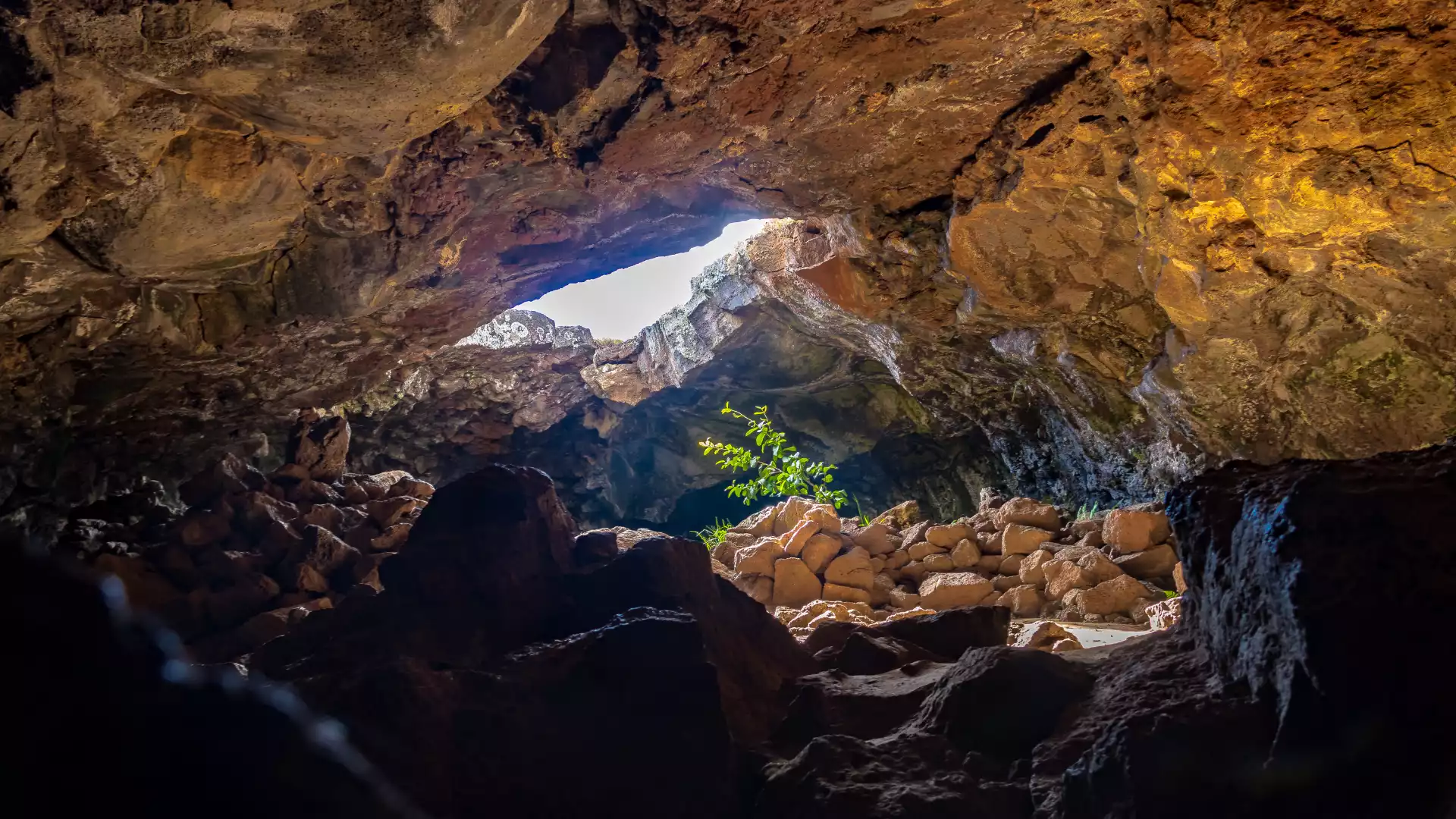
Ana Te Pahu cave was formed thousands of years ago due to the volcanic eruptions of Maunga Hiva Hiva, a crater that left a solidified lava flow. The cavern is composed of a series of interconnected subway chambers, which together exceed 7 kilometers in length. The thin layer of hardened lava that covers the cavity creates a kind of giant natural drum, which resonates when struck, giving the cave its name, which means “the cave of the drum” in Rapa Nui.
Ana Te Pahu is not only a geological wonder, but it has also been a vital place for human life. The ancient Rapanui used this cave as a dwelling, taking advantage of its ample space and accessibility. The remains of ancient stone ovens (umu pae) found in its interior indicate that food was cooked here, and the openings in the roof allowed the smoke to escape.
In addition, one of the main chambers of the cave functioned as a natural water reservoir, essential during times of drought or when the cave was used as a refuge during tribal conflicts or slave raids in the 19th century.
The cave of banana trees: A natural nursery
Also known as the “banana cave”, Ana Te Pahu stands out for the abundant vegetation that grows at its entrance, including banana trees, vines and fruit trees such as avocado and taro. The constant humidity and protection from the wind offered by the cave made this place an ideal natural nursery for the crops of the ancient islanders. You can even observe petrified traces of the endemic palm of Rapa Nui, known as niu.
The entrance to Ana Te Pahu is located at a point where the lava collapsed, creating large stone steps that must be descended with caution. It is essential to bring a flashlight to explore the darker areas and proper footwear to avoid slipping in the wet areas. As you descend, you can see the lush banana trees that welcome visitors.
Following the path to the left, you come to a chamber with a tree growing to the surface through an opening in the ceiling. Returning to the entrance, a wide tunnel protected by stone barriers opens to the right, indicating that it was used as a defense against intruders. Further on, a large opening in the roof illuminates an area with dense vegetation and an ancient stone oven (umu pae). The more adventurous can continue exploring the volcanic tube, where the marks left by the lava flow can be seen.
How to get to Ana Te Pahu
To get to Ana Te Pahu from Hanga Roa, take the Ara Roa Rakei road towards Ahu Akivi. This route is usually part of the cave circuit offered by many tour agencies, which includes visits to Ana Te Pahu, Ana Te Pora and Ana Kakenga. After passing a checkpoint where you present your National Park ticket, you continue on foot or by bicycle for approximately 10-15 minutes until you reach the cave entrance.
Conclusion: Ana Te Pahu is a subway jewel of Rapa Nui, offering a unique blend of geology, history and nature. Its exploration provides a different perspective of life on the island, showing how the ancient Rapa Nui ingeniously used the natural resources at their disposal.
If you are planning your visit to the island, we invite you to review our rooms and experience a unique Rapa Nui adventure with our our tours guided by native experts!