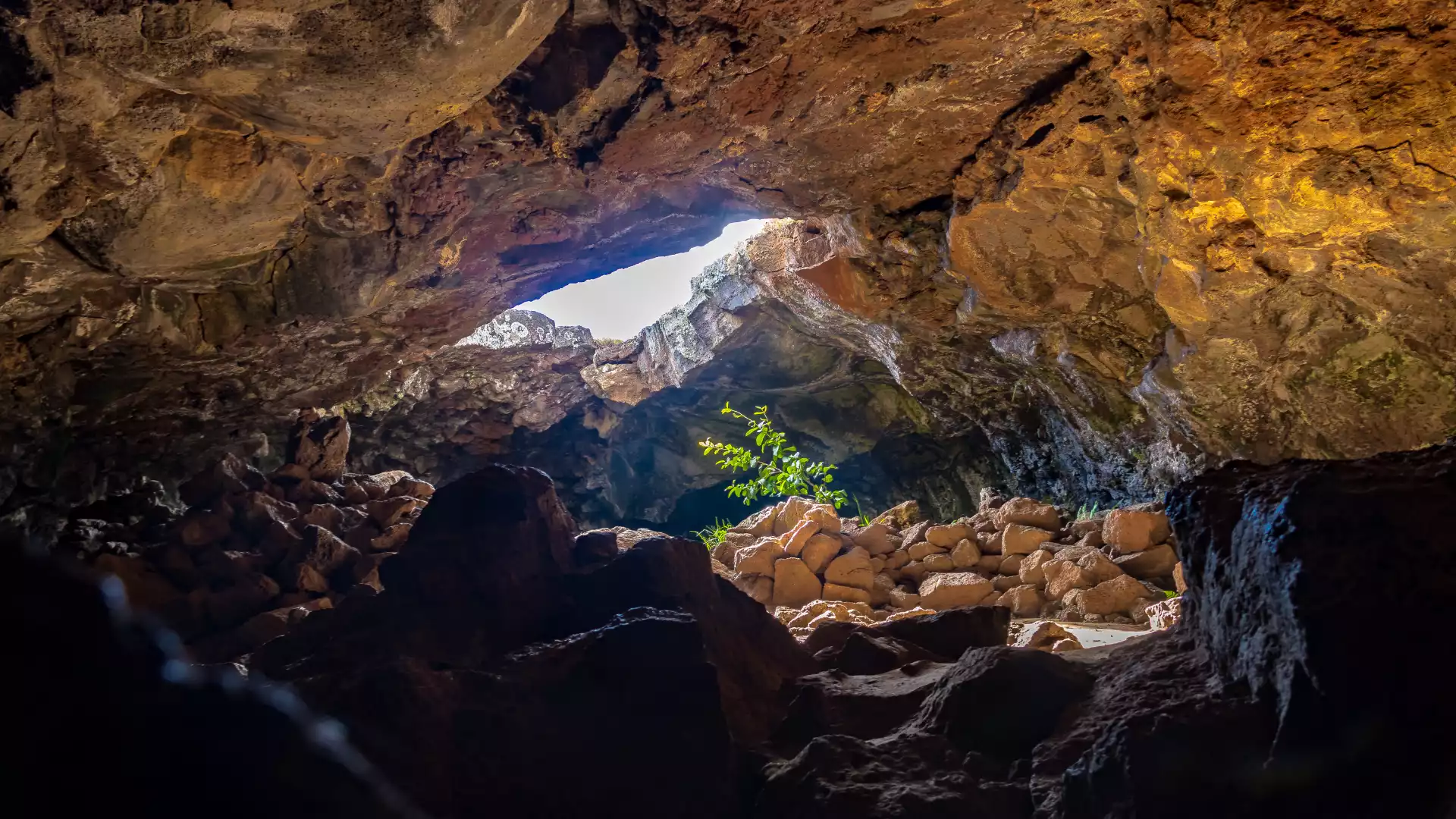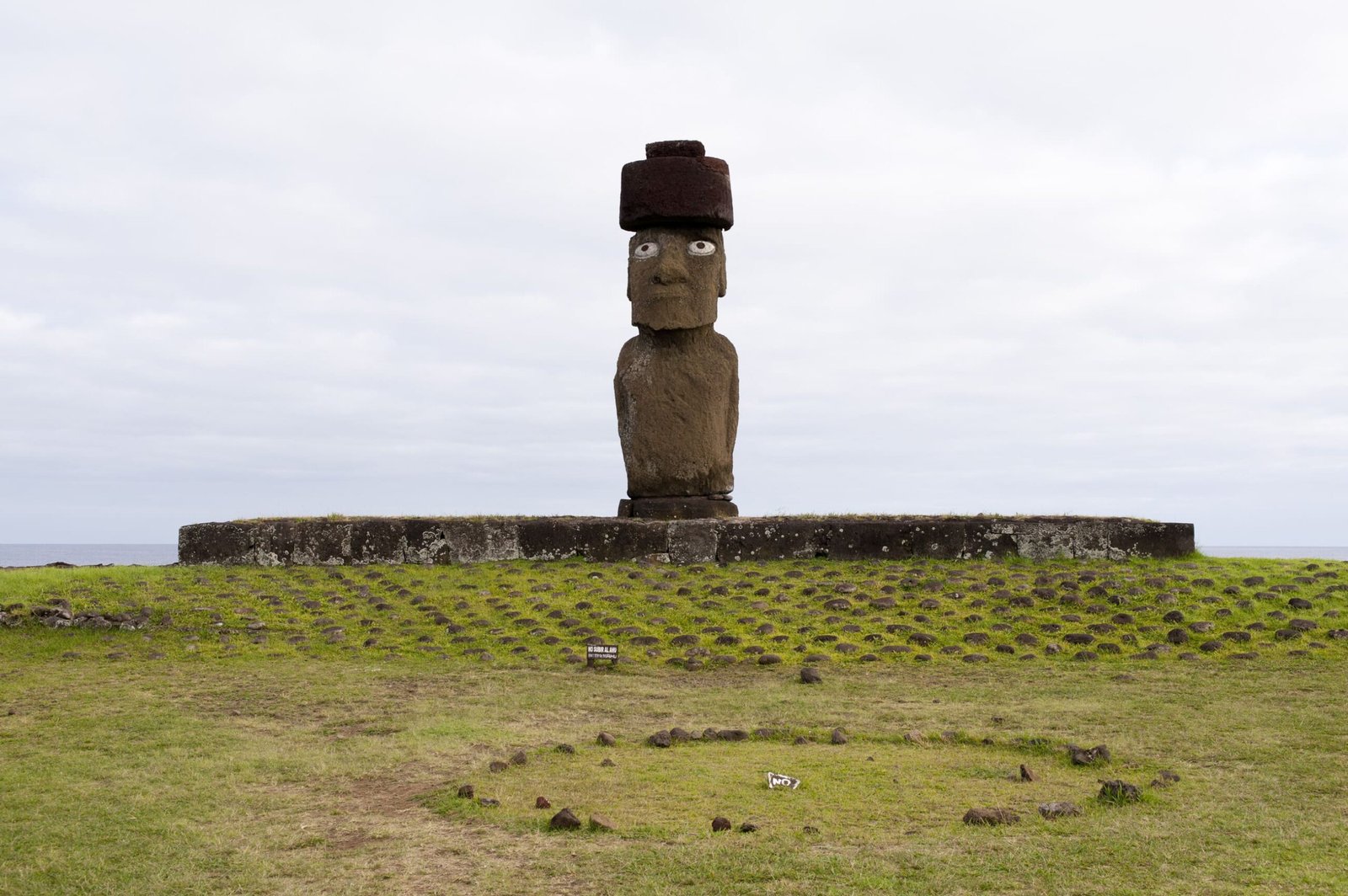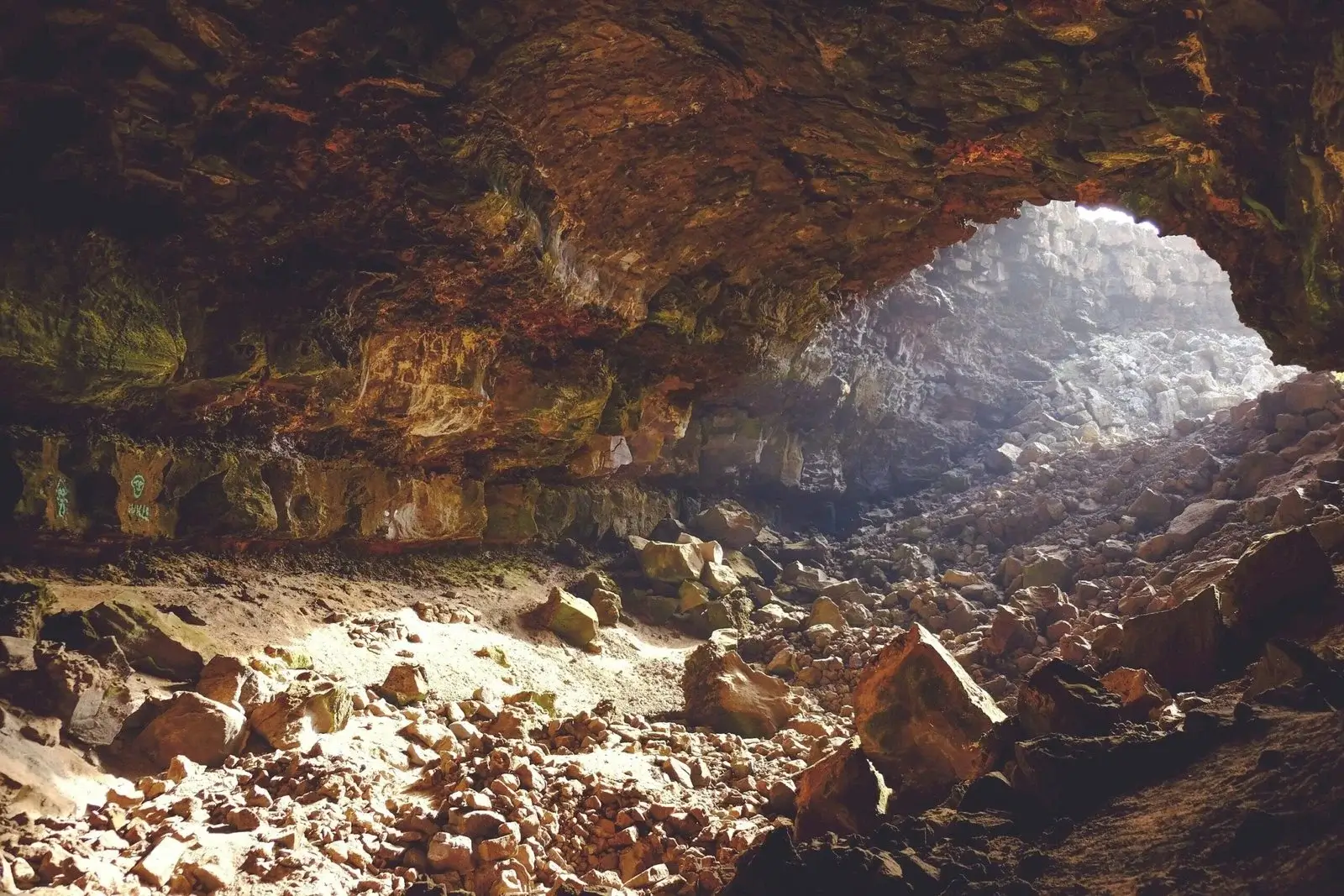
Ana Kai Tangata is one of the most fascinating and enigmatic caves of Rapa Nui, located in front of the sea on the south coast of the island. Its name, its mysterious past and the cave paintings it houses, make it an unmissable site for those seeking to understand the ancestral Rapa Nui cosmovision.
What does Ana Kai Tangata mean?
Interpretations of the name
In the Rapa Nui language, Ana means “cave”, Kai translates as “to eat”, and Tangata as “man”. Therefore, its name could be translated as “the cave where men are eaten”.
This interpretation has given rise to the hypothesis that it was a site related to ritual cannibalism, although archaeologists warn that there is no conclusive evidence. Some suggest that the name could have a symbolic or metaphorical meaning, associated with war practices or ancestral punishment.
A site loaded with cultural symbolism
Strategic oceanfront location
Ana Kai Tangata is located in the southern part of Hanga Roa, a short distance from the Mataveri airport, and is accessed by following the coastal route. Its entrance, at sea level, allows visitors to enter on foot through a path that descends to the cliffs.
From inside the cave, the sound of the waves hitting the rocks and the sea breeze generate an immersive, almost spiritual experience that connects with the ritual dimension that this space had for the ancient inhabitants of the island.
Cave paintings and the bird-man cult
One of the main attractions of Ana Kai Tangata are its original cave paintings, made with natural pigments in red, white and black tones.
These representations include:
Figures of the Tangata Manu (bird-man), a key figure in the rituals of the winning clan of the annual competition in Orongo.
Seabirds such as manutara (terns), sacred species in Rapa Nui mythology.
Stylized human figures that could represent tribal chiefs or participants in ceremonies.
These artistic manifestations are a living testimony of the beliefs and power structures of Rapa Nui before European contact.
How to visit Ana Kai Tangata
Access and recommendations
From Hanga Roa, take the coastal road past the Iorana Hotel and the end of the airstrip.
The cave is close to the sea and access is on foot, through a marked path.
It is recommended to visit with appropriate footwear and to be cautious with the humidity in the rocks.
Important: The paintings are exposed to the weather and are highly fragile. It is forbidden to touch them or use flash photography.
Why visit Ana Kai Tangata?
If you are interested in cultural tourism, archaeology or simply want to experience the unique energy of Rapa Nui, Ana Kai Tangata is a must-see. It is one of the few places where the original rock art can still be observed in its natural environment, accompanied by a stunning coastal landscape.
Discover our guided tours and more information on our social networks.