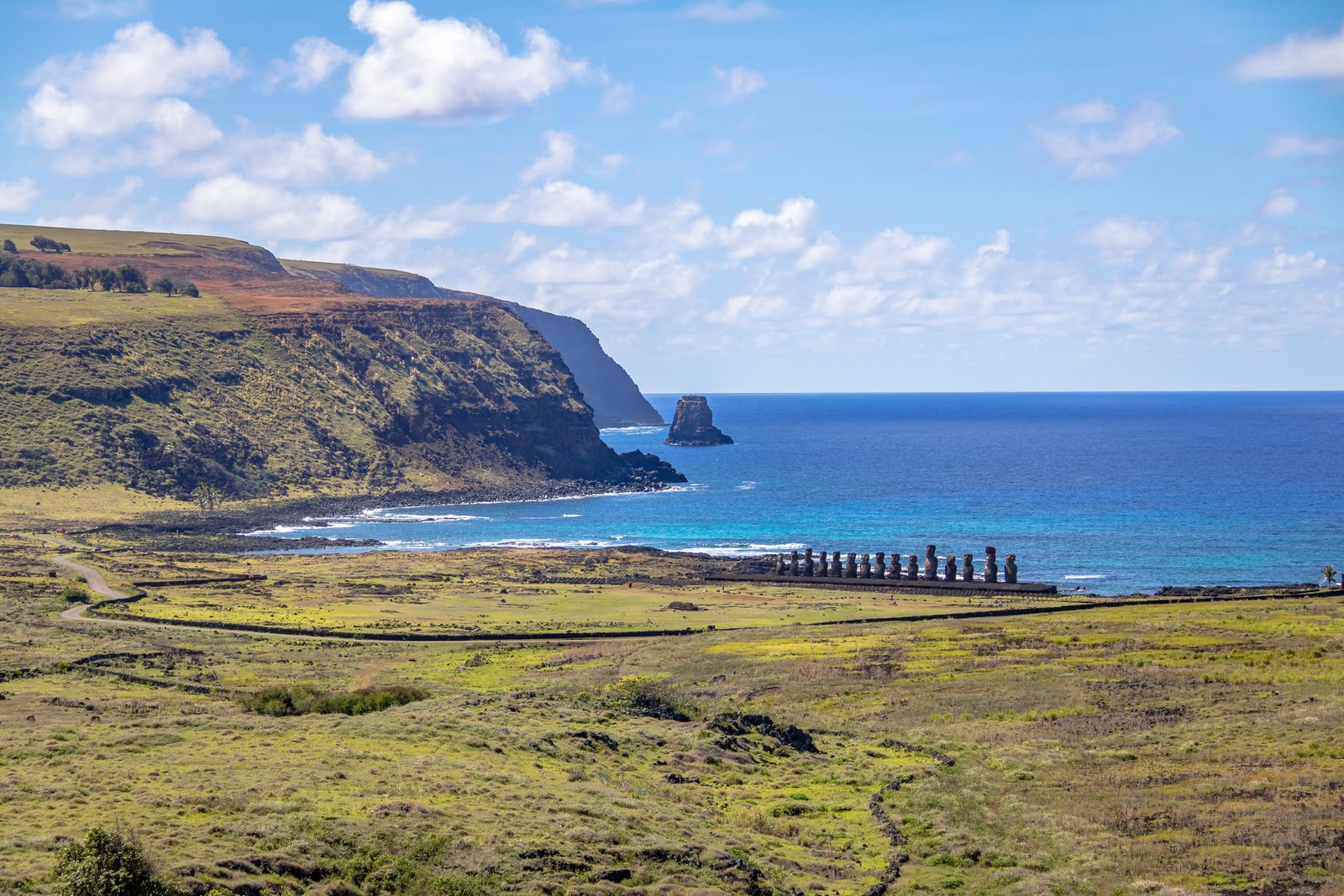
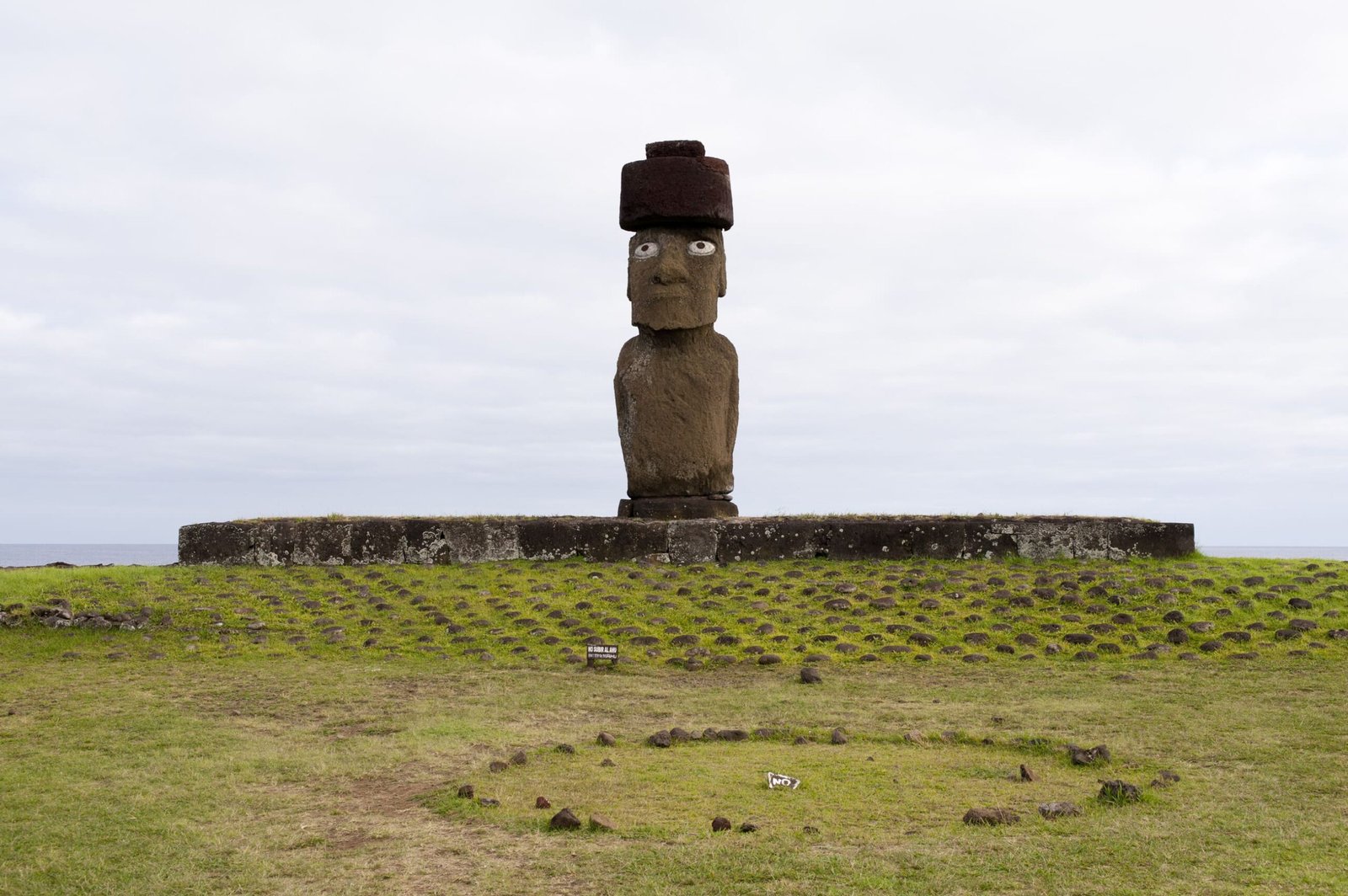
At the southern end of the Rano Raraku quarry, where the serpentine road unveils a majestic scene with the Poike volcano and the imposing silhouettes of Ahu Tongariki as a backdrop, stands the Tukuturi Moai. This moai is one of the most intriguing and debated figures on Easter Island, offering a unique view compared to the traditional upright statues that dominate the landscape.
Discovery and description
Discovered in 1956 by Thor Heyerdahl’s expedition, the Tukuturi Moai quickly captured the attention of locals and visitors alike. Unlike the other moai that are usually imposing and mysterious, Tukuturi presents a more realistic and accessible air, kneeling with its legs bent backwards, resting its buttocks on its heels. Its complete structure, including legs and hands on the thighs, shows a clear influence of the reverential postures typical of Polynesia.
Unique features of the Tukuturi Moai
Tukuturi is distinguished not only by its posture but also by its design. Its head is more rounded with prominent eyes and a goatee, reminiscent of the kava kava moai, and faces the Rano Raraku volcano, contrary to most of the moai that face the outside of the island. This moai, which is approximately 3.70 meters high and weighs about 10 tons, is also the only one in a squatting position, a rarity among the island’s statues.
Theories about its origin
The peculiarity of Tukuturi has generated multiple theories about its origin and purpose. Some experts consider it to be one of the earliest moai, possibly from the 10th century, while others argue that it could be a more recent figure related to the cult of Tangata Manu. There is no lack of theories suggesting that Tukuturi could have been an external influence, perhaps brought or influenced by Tahitian workers towards the end of the 19th century, given its resemblance to Polynesian tikis.
The mystery of its location and purpose
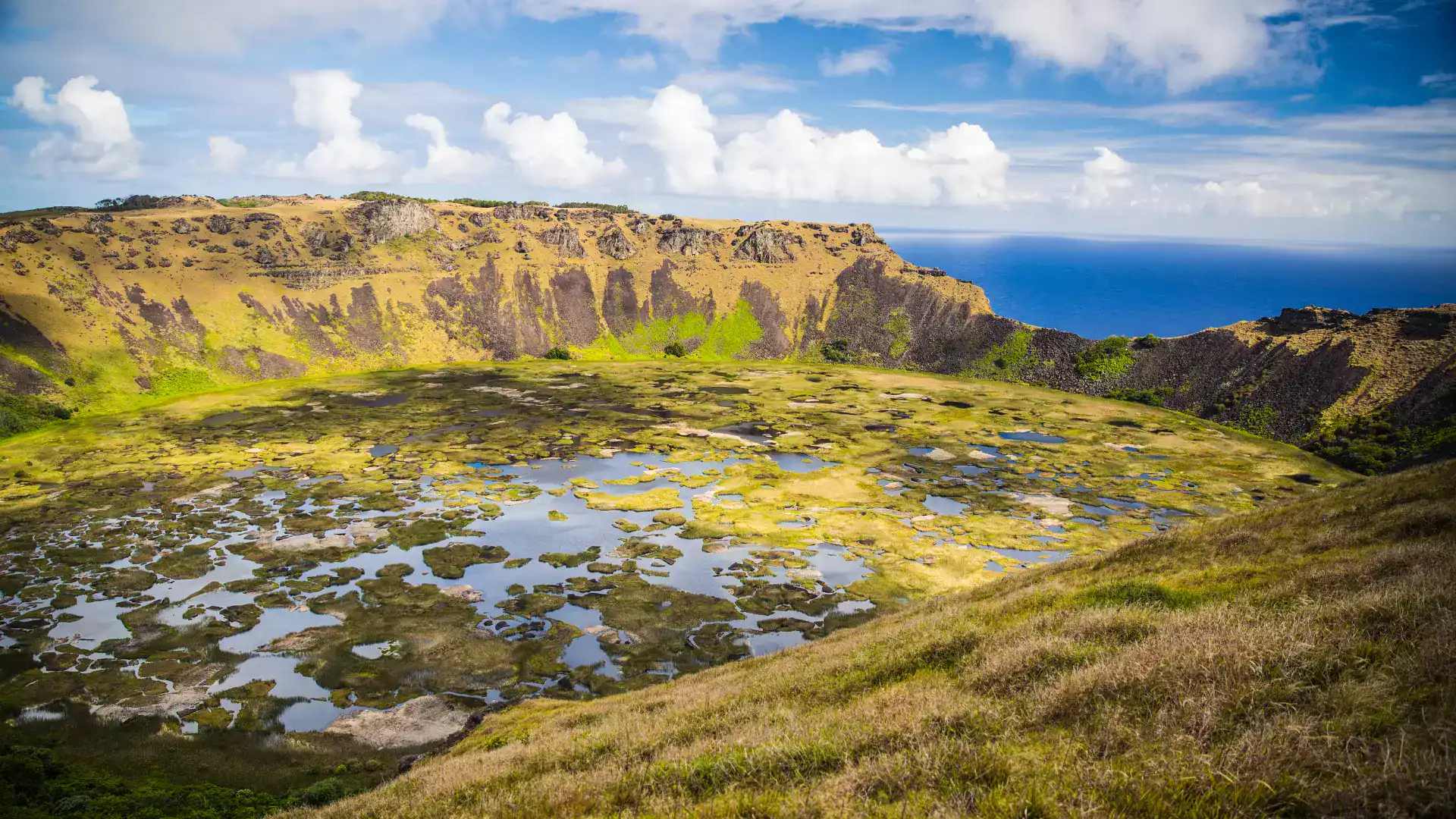
Tukuturi is also notable for its unique orientation towards the Rano Raraku, which has led to speculation about its possible ceremonial or symbolic function in relation to the activities that took place in the quarry and the volcano. Its position and style could have had specific meanings within the traditions and rituals of the Rapa Nui population of the time.
Cultural and tourism impact of Tukuturi
The Tukuturi Moai is not only a testament to the artistic and cultural diversity of the ancient inhabitants of Easter Island but also remains a focal point of fascination for historians, archaeologists and tourists. Its unique shape and the stories that surround it make it an essential stop for any visitor to the island, offering a different perspective on the rich history and legacy of Rapa Nui.
The Tukuturi Moai remains a kneeling enigma that defies convention and enriches our understanding of Easter Island. Whether seen as a vestige of the early stages of sculpture on the island or as a symbol of broader cultural connections, Tukuturi continues to capture the imagination of all who behold it, keeping alive the rich heritage of Rapa Nui.
Check out our rooms and book at Hare Nua and live Rapa Nui with our tours our tours guided by native experts!